
Field Index
5 Dessert Destinations in Gangnam Worth Planning For (2026)
An editorial walk through five rooms — patisserie, plated tasting, traditional Korean confection, and one gallery basement.
I grew up between Los Angeles and Seoul, and the part of Gangnam I keep returning to is not the obvious nightlife strip but the corridor that runs from Apgujeong-ro to Dosan Park, where dessert has quietly become its own design discipline. The pastry counters here are doing the same convergence of product engineering and aesthetics that I write about in technology — controlled variables, repeatable output, and a room built to host the moment of consumption. The signature plates in this district are not improvisations; they are productized, refined across seasons, and presented inside architecture that was commissioned for the dessert itself. If you are flying in for a longer trip and want to plan two or three dessert sittings without retracing your steps, this is the editorial route I send to friends. The five rooms below are presented as Featured A through E, in walking order between the Apgujeong and Sinsa anchors, not as a ranking — Gangnam holds enough qualified dessert programs that any ranking would be a single editor's snapshot rather than a durable list.
How to read this dessert map
A Gangnam dessert visit is a planning problem, not a craving problem. The room you sit in matters as much as the plate; the reservation window is sometimes longer than the experience itself; and the price spread across these five entries runs from roughly KRW 8,000 at a walk-in counter to KRW 60,000 at a tasting-only patisserie. To make this readable, I have classified each entry on three axes — Format (walk-in counter, sit-down room, or reservation-only tasting), Signature (the single item the cafe is best known for), and Pairing (the immediate neighborhood detour that lets the visit anchor a half-day rather than a forty-minute stop). The five entries are not duplicates of each other; each one is doing a different category of work. Use the comparison table at the bottom of the page if you have less than half a day in Gangnam and need to choose one. The Apgujeong and Dosan corridor and the Sinsa and Garosu-gil strip are within a comfortable walking distance, so it is realistic to sit at two of these in the same afternoon if you book ahead. The traditional Korean confection room in Cheongdam (Featured D) is the outlier that asks for a small Uber or a longer walk along Dosandaero, and I treat that stop as its own destination rather than a follow-on. The methodology below summarises how this list survived a two-source published-coverage threshold and an in-person research window; it is editorial pick framing rather than a popularity ranking, and the entries are presented in geographic order so the reader can stitch them into an afternoon plan without re-reading the page.
A note on what this list is not. It is not a comprehensive index of every dessert program in Gangnam — the district holds many more rooms doing strong work, and a complete list would be unreadable. It is also not a chain or franchise round-up; the international cafe chains and the large multi-floor mega-cafes on Garosu-gil are well-covered elsewhere, and the editorial value here is in the smaller, more design-led rooms that are easy to miss on a short trip. Finally, it is not a list of value picks or hidden gems; several of these rooms operate at meaningful price points, and the editorial position is that the experience justifies the spend rather than that the spend is hidden. With those guardrails in place, the five entries below are the rooms I most often send to friends planning a Seoul trip who already know what Apgujeong is and want to use a half-day inside Gangnam well.

Featured A — Nudake Haus Dosan (sculptural pastry, gallery basement)
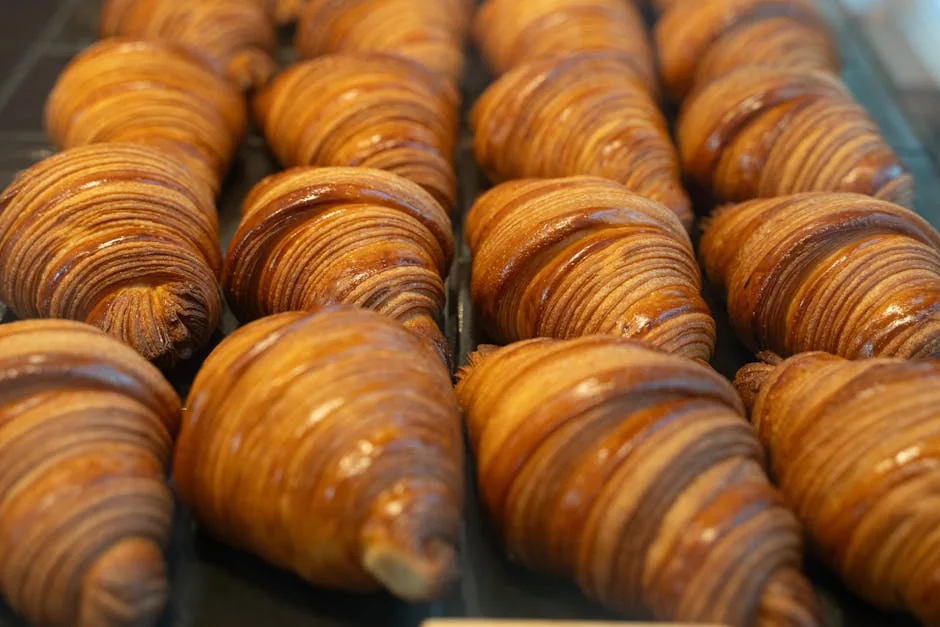
Nudake Haus Dosan is the dessert program inside the Gentle Monster brand-experience building on Apgujeong-ro 46-gil, and it is the room that defines what most international visitors mean when they say 'Gangnam dessert.' The Peak — a deeply matcha-glazed mountain set on a chocolate ridge — and the rotating croissant-art series are the items photographed most often, and the brand updates the case rotation roughly every season so a return visit in autumn does not look like a return visit in spring. Format is walk-in counter with seating, hours run daily 11:00 to 21:00, and the price band is KRW 9,000 to KRW 18,000 for a single set. The address is B1, 50 Apgujeong-ro 46-gil, Gangnam-gu, Seoul, and the basement floor sits underneath the Haus Dosan retail concept; the entrance is through the building's main door, then down the central stairwell.
The room itself is what I find most worth the trip from a design perspective. Haus Dosan was built as a single architectural narrative across five storeys — Gentle Monster eyewear on the upper floors, Tamburins beauty on a mid floor, and Nudake in the basement — and the dessert program is treated as the closing movement of the building rather than a tenant. The lighting drops as you descend, the pastry casework reads as a gallery vitrine, and the seating clusters around a sculpture-like central counter that the team rotates with the seasonal pastry release. The visual language is consistent with the Gentle Monster line: matte concrete surfaces, oversized objects rendered in unexpected proportions, and a deliberately quiet sound profile so the room reads as a museum rather than a cafe. I budget twenty minutes here for the visit itself, then a longer half-hour walking the Gentle Monster floors above, and the total stop ends up closer to an hour by the time you have stood in line, ordered, eaten, and walked the upper levels.
A few operational notes. Language support is an English menu at the counter; the staff is trained to flag the seasonal item and the customer-favorite item to international guests, which is useful because the case rotation does not always carry English labels on every piece. Reservation is walk-in only, and the queue at peak hours — Friday and Saturday afternoons, roughly 14:00 onward — can run twenty to thirty minutes; weekday mornings are usually a five-minute wait. The seating turns over fast because the room is sized for a thirty-minute stop, so a small group should expect to find a table within fifteen minutes even at peak. Pairing: Tamburins Flagship Sinsa, the kinetic-horse installation a fifteen-minute walk west toward Garosu-gil, works as a continuation of the same design lineage, and the Sulwhasoo Dosan Flagship six storeys high on Dosan Park is the natural third stop if you are running a beauty-and-design afternoon rather than a pure dessert circuit. I send first-time visitors here before any of the other entries on this list because it is the entry that calibrates expectations for what the rest of the district is doing.

Featured B — SONA (reservation-only patisserie, Champagne Sugar Ball)
SONA, in the Sinsa and Garosu-gil cluster, is the entry on this list that asks you to plan the most aggressively. Chef Hyunah Sung runs a reservation-only dessert bar, hours are Wednesday through Sunday 12:00 to 22:00, and the price band lands at KRW 35,000 to KRW 60,000 for a plated dessert tasting. The signature is the Champagne Sugar Ball — a transparent spun-sugar sphere with edible flowers and champagne foam suspended inside that the server cracks tableside — and it is the single item I most often see at the center of Seoul dessert editorial coverage. Booking runs through NaverPlace, and the room sells out roughly two to four weeks out in the high travel seasons; English-language reservation is supported and the menu is bilingual.
From a format standpoint, SONA is closer to a tasting menu than a cafe. You sit at the counter, the chef and her team plate in front of you, and the experience runs roughly forty-five minutes to an hour rather than the twenty-minute drop-in pace of a counter cafe. The room is small and the dishware is treated as part of the composition, which means photography is welcome but the seating itself does not lend to long laptop sessions. The plates are sequenced — typically four to six elements depending on the menu cycle — and the chef walks the room through the build of each one as it lands, which is a meaningful part of why the price band lands where it does. The pastry technique is the kind of detail-engineering work I most respect: edible flowers are sourced through a small group of growers, the sugar sphere is pulled fresh each service, and the foam composition shifts with the seasonal champagne profile. If you treat the visit as a one-hour anchor rather than a quick stop, the math on the price band is closer to a tasting-menu visit than a cafe.
A few planning notes. The reservation cadence is the meaningful constraint: in the spring and autumn travel peaks, the booking window can close two to four weeks ahead, and during slower months the window collapses to a few days. I keep a saved bookmark to the SONA NaverPlace listing and check it the moment a Seoul trip is on the calendar. English reservation works through the NaverPlace flow without a Korean phone number, but the confirmation flow does ask for an email address, and the cancellation policy is firm enough that I would not book the table without a confirmed travel date. Photography is permitted at the counter; flash is asked off out of respect for the plating timing. Pairing: walking ten minutes onto Garosu-gil proper, the tree-lined strip between Sinsa Station and Apgujeong, is the natural before-or-after movement, and the side alleys (serosu-gil) carry the boutique density covered in the companion vintage piece on this site. If the SONA hour lands late in the afternoon, the Garosu-gil retail walk before the seating is the cleaner sequence; if it lands at 13:00, the retail walk afterward catches the late-afternoon light on the gingko trees.

Featured C — PLD Dosan (Earl Grey tea cake, Apgujeong Rodeo)
PLD Dosan is the Apgujeong Rodeo sibling of the original PLD that built its reputation in Seongsu, the warehouse-district cafe quarter east of the river, and it is the entry I recommend for visitors who want a Seongsu-style pastry program without crossing town. Format is walk-in with seating, hours are daily 11:00 to 21:00, and the price band sits at KRW 10,000 to KRW 20,000 for a single set. The Earl Grey tea cake — a chiffon base topped with Earl Grey ice cream and house cookies that arrive built into the plating rather than alongside it — is the item most often referenced in Korean dessert-cafe coverage, and the seasonal-ingredient rotation through the rest of the menu (fig in autumn, citrus in winter, strawberry in late winter and spring) is consistent enough that the room rewards a second visit on a longer trip.
The siting is part of the appeal. Apgujeong Rodeo is the older luxury-retail strip that runs north of Apgujeong Station; it had a long quiet stretch in the 2010s and is now repositioning as a slower, more design-led alternative to Garosu-gil and Cheongdam. PLD Dosan sits inside that revival, and the room reads as a deliberately quieter alternative to the Haus Dosan crowd ten minutes south. The interior is smaller, the seating runs to four-tops and a long shared counter, and the music sits low enough that conversation works at normal volume — which is unusual in a Gangnam dessert room of this caliber. English menu is present at the counter, reservation is walk-in, and the queue rarely runs past ten to fifteen minutes outside Saturday afternoon peak. The team rotates the seasonal cake roughly every four to six weeks, and the social media announcement runs through the cafe's Instagram, which is the cleanest source for what is on the case this week.
From a pairing standpoint, the rest of Apgujeong Rodeo is currently the most underrated cluster of independent boutiques and gallery-adjacent storefronts in Gangnam. A thirty-minute walk loop north from the cafe will pull in three or four pieces of programming that I will not detail here because they rotate seasonally — designer pop-ups, art-adjacent retail concepts, and the occasional pre-opening preview for a Cheongdam gallery. If you have flown in for a longer stay and want to visit a Gangnam dessert room that is not on the Garosu-gil queue circuit, this is the one. If your day already lands inside the Haus Dosan complex, PLD Dosan is the cleanest follow-on because it sits at a different design temperature — quieter, warmer, less performative — and gives the afternoon a contrast rather than a repetition. The combination of the Featured A high-design counter and the Featured C neighborhood-pastry counter, sat back-to-back, is one of the strongest two-stop sequences in the district.

Featured D — Haap Cheongdam (traditional Korean confection, citrus bingsu)
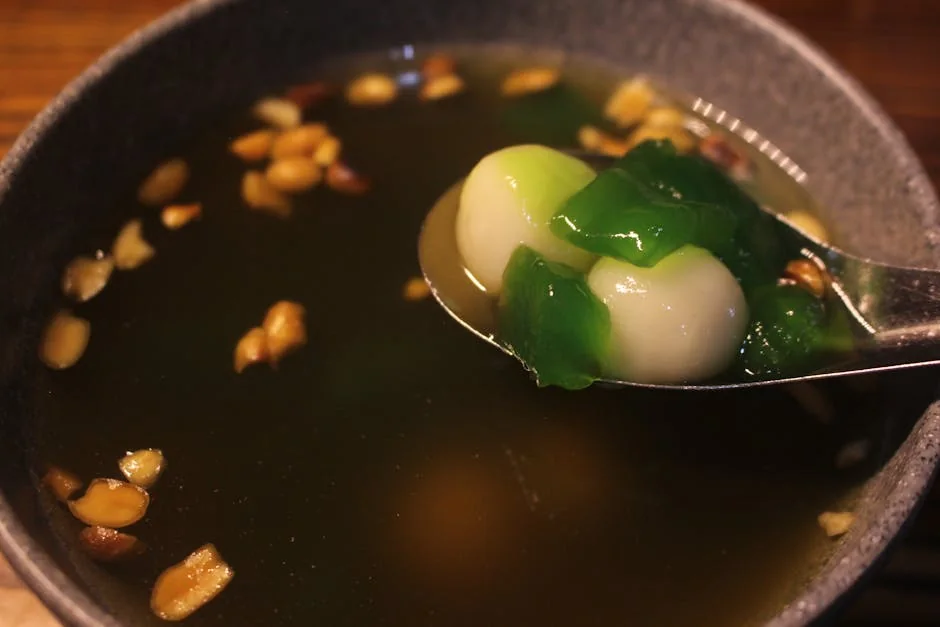
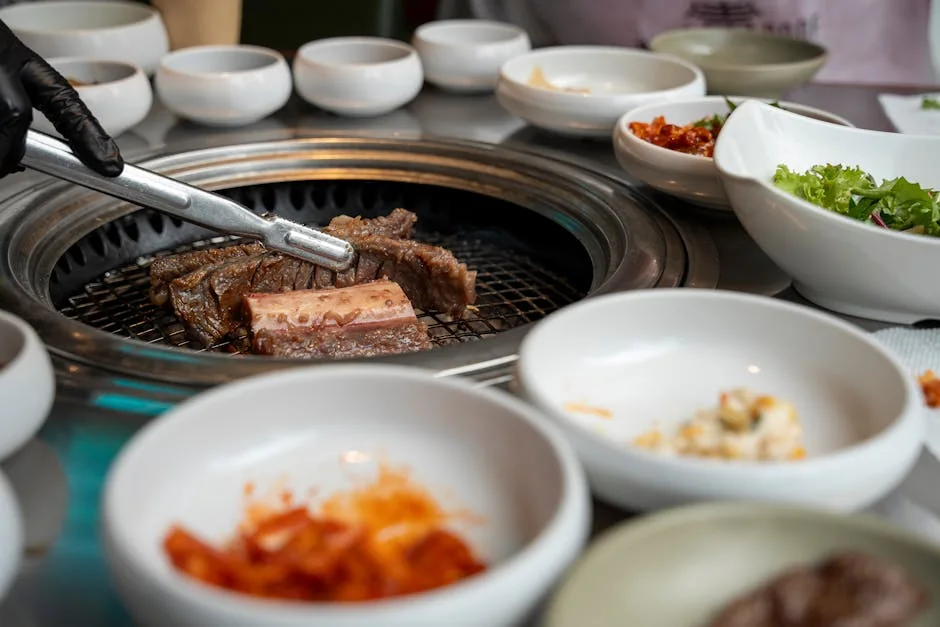
Haap (合), in Cheongdam, is the entry on this list that does the most cultural translation work. The kitchen builds the menu around jeungpyeon (steamed rice cake, lightly fermented) and hangwa (traditional Korean confection in honey-and-grain bases) — historical Korean dessert categories that most international visitors have not encountered — and presents them in a modern cafe format rather than as museum reproductions. Format is walk-in with sit-down seating, hours run daily 11:30 to 22:00, and the price band sits at KRW 12,000 to KRW 22,000 per set. The Citrus Bingsu — fresh lemon and milk over shaved ice, with the jeungpyeon and a hangwa garnish on the side — is the most photographed item and the cafe is regularly cited as a stop on the traditional-Korean-dessert route through Cheongdam.
The room itself reads as a careful design exercise in wood, neutral linen, and indirect light, and the staff is trained to walk an English-speaking visitor through what each item is, where it sits in the historical lineage, and how the pairing is meant to work. This is rare in Seoul dessert programming. Most cafes in the district will hand an international guest a translated menu and step back; Haap actively narrates the cultural context, which is the reason the room is the entry I most often recommend to first-time visitors who already know the Garosu-gil counter cafes and want a stop that does something the counters do not. I recommend this as a longer single sitting rather than a quick stop — budget forty-five minutes to an hour, partly because the textural range across the plates is unfamiliar enough that rushing the visit defeats the point. The tea program is paired to each dessert (the citrus bingsu lands with a fragrant green tea, the hangwa selection lands with a roasted-grain infusion), and the pairing notes on the menu are translated in full.
Pairing: the Cheongdam gallery cluster — SongEun ArtSpace inside the Herzog and de Meuron building, Perrotin Seoul, White Cube Seoul, KÖNIG GALERIE Seoul, Massimo De Carlo Seoul — is a comfortable walking distance and creates a natural cultural-program afternoon. Cheongdam runs cooler in tone than Apgujeong; the streets are quieter, the retail tilts toward galleries and luxury anchor stores, and the pace of the afternoon shifts accordingly. The cafe is walk-in only, but the room is large enough that I have rarely waited more than ten minutes outside of Saturday afternoon peak. If your Seoul trip is anchored around a Cheongdam hotel — the Andaz, the Park Hyatt, or one of the smaller design hotels that have opened in the district — Featured D is the entry I would build the dessert plan around, and the other entries on this list become the secondary stops on the way north or west.
Featured E — Upper and Under (Einspanner counter, Gangnam Station core)
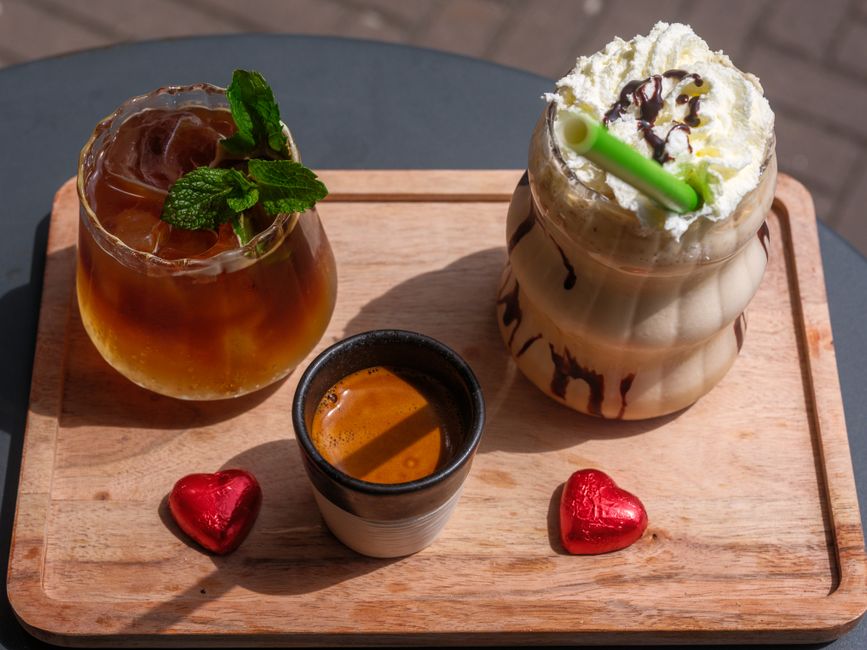
Upper and Under, in the Gangnam Station core, is the entry I include for visitors whose Gangnam day is being built around the south side of the river rather than the Apgujeong and Sinsa corridor — a hotel near Gangnam Station, a meeting on Teheran-ro, or a connection out of the COEX district to the east. The Einspanner program — the dense whipped-cream Viennese coffee that has become a Seoul cafe staple over the last five years — is the reason the cafe consistently appears on neighborhood lists, and the rotating matcha and vanilla cake variants at the pastry counter give the visit a more substantial second course than a coffee bar alone. Format is walk-in, hours daily 11:00 to 22:00, and the price band lands at KRW 8,000 to KRW 14,000, the most accessible on this list.
The room is positioned, deliberately, as a calmer alternative to the Garosu-gil mega-cafes — the multi-floor concept stores that sit on the strip and operate at queue-and-rotation pace through the afternoon. Seating is workable for a thirty-minute sit and an English menu is present at the counter. The Einspanner technique is the workhorse of the menu: a double shot of espresso, a precisely whipped cream cap, and a serving glass that lets the coffee pull through the cream as you drink, with the temperature gradient between the cold cream and the hot espresso staged across the first three sips. The variants — vanilla, matcha, and seasonal flavors that rotate every six to eight weeks — are the reason I keep the cafe on my map even though the room itself is more functional than designed. The pastry counter runs a small but consistent program of matcha and vanilla cakes, and the seasonal item is usually the strongest pick.
Pairing: this is the entry to use as a single stop rather than a destination, and I most often recommend it as a recovery sit after a Gangnam Station appointment or as a pre-dinner anchor before walking north into Sinsa. The cafe is the entry on this list that does not require a reservation strategy or a longer travel window, which is why I include it as the closing Featured rather than the opener. If you are based at one of the Gangnam Station hotels — JW Marriott Dongdaemun is across town, but the Novotel Gangnam, the Hotel Cappuccino, and the Lotte City Hotel Mapo are all within walking distance or one-stop subway — Featured E is the entry that does not require any planning beyond a fifteen-minute walk. The Einspanner is a strong enough product on its own that the visit can stand without the destination framing the other four entries on this list rely on.
Five dessert rooms — at-a-glance comparison
Categorical comparison across format, hours, price band, signature item, and neighborhood. Use the table to filter on a half-day window — Featured B sets the highest planning bar through the reservation-only format, Featured D sets the longest sit-down at forty-five minutes to an hour, and Featured E carries the most accessible price band at the south end of the corridor.
| Featured | Cafe | Neighborhood | Format | Hours | Price band (KRW) | Signature |
|---|---|---|---|---|---|---|
| A | Nudake Haus Dosan | Apgujeong and Dosan | Walk-in counter | Daily 11:00-21:00 | 9,000-18,000 | The Peak (matcha) and croissant art |
| B | SONA | Sinsa and Garosu-gil | Reservation-only tasting | Wed-Sun 12:00-22:00 | 35,000-60,000 | Champagne Sugar Ball |
| C | PLD Dosan | Apgujeong Rodeo | Walk-in counter | Daily 11:00-21:00 | 10,000-20,000 | Earl Grey tea cake |
| D | Haap Cheongdam | Cheongdam | Walk-in sit-down | Daily 11:30-22:00 | 12,000-22,000 | Citrus bingsu and jeungpyeon |
| E | Upper and Under | Gangnam Station core | Walk-in counter | Daily 11:00-22:00 | 8,000-14,000 | Einspanner and matcha cake |
How to sequence two rooms in one afternoon
If you have one afternoon, the highest-yield route is Featured B at the reservation slot you can secure plus Featured A as the open-window flanker. SONA closes its booking window two to four weeks ahead in the high seasons; build the day around that hour and treat everything else as elastic. The walking distance from Garosu-gil to Apgujeong-ro 46-gil is roughly fifteen minutes along Dosandaero, which means a 13:00 reservation at SONA pairs cleanly with a 15:00 counter visit at Nudake, with a thirty-minute Garosu-gil walk between them. The Gentle Monster floors above Nudake give the second half of the afternoon a longer footprint than a pure dessert stop would carry, and the combined plan runs roughly three to four hours from sit-down to last walk-through.
If the booking window has already closed, swap Featured B for Featured D. Haap in Cheongdam carries the longer-sit experience that SONA does, the citrus bingsu is photogenic on a different axis than the Champagne Sugar Ball, and the Cheongdam gallery cluster gives the afternoon a cultural-program anchor that replaces the Garosu-gil retail walk. Pair Featured D with Featured C if your hotel sits on the Apgujeong side and you want a single neighborhood; pair Featured D with Featured A if you want the gallery-to-gallery framing — Haap's design lineage and Haus Dosan's design lineage are doing different versions of the same convergence work, and the contrast is worth sitting through both in one afternoon. Featured E is the entry I would never make the centerpiece of an afternoon but is the most useful when the afternoon was supposed to be about something else — a hotel checkout near Gangnam Station, a meeting on Teheran-ro that ran long, a Suvarnabhumi-bound connection through Gimpo. If a flight delay or a meeting overrun forces a single stop south of the river, Featured E is the entry that does not require any further planning and still delivers a meaningful dessert visit inside an hour. The five-room map is designed so that two stops cover most half-day windows; a longer Seoul trip rewards the full sweep, but the realistic ceiling for a single afternoon is two rooms plus a neighborhood walk between them.
Editorial note — how this list was built
This list draws on Korea Tourism Organization neighborhood guides, the Seoul cafe coverage published through Visit Seoul's English platform, and an editorial cross-check against the long-form English-language Gangnam dessert coverage indexed during research. The entries listed are the five rooms that survived a published-coverage threshold across at least two independent sources and a visit during the research window. I do not accept comped meals or comped reservations for editorial entries on this site; I do receive standard travel-industry press notes when they are circulated. I have classified each entry on format, signature, and pairing rather than ranking them, in keeping with editorial pick framing — this is a curated discovery list rather than a ranking, and the order is Apgujeong-outward walking order, not preference. The traditional-Korean-confection room (Featured D) is the entry that does the most cultural-translation work on this list and the one I most often recommend to first-time visitors who already know the Garosu-gil counter cafes.
A second note on what was excluded. The Garosu-gil mega-cafes — the multi-floor concept stores that anchor the strip on a queue-and-rotation pace — are not on this list because they are well-covered elsewhere and because the editorial value here is in the smaller, more design-led rooms that a short trip can otherwise miss. The international cafe chains in the district are also excluded for the same reason. A few well-loved local rooms that did not survive the two-source coverage threshold are on a watch list for a future update of this piece; the editorial position is that consistency across published coverage is the cleanest available proxy for durability, and a single one-source mention is not enough to anchor a destination-level recommendation. If a published Seoul cafe guide names a room repeatedly across two or three calendar years, that is the signal I weight most heavily. The five entries above all clear that bar.
FAQ — planning a Gangnam dessert visit
Common questions visitors send before booking. The answers are aggregated from the research window and from the published hours and price bands of each entry.
“Gangnam dessert is the place where Korean product engineering meets room design — the plate is the artifact, but the architecture around it is what makes the visit worth the planning window.”
Daniel Park, Sofwave Studio editorial
Frequently asked questions
Do I need to book ahead for these five dessert cafes?
Only one of the five — SONA (Featured B) — is reservation-only, and the booking window typically opens two to four weeks ahead through NaverPlace. The other four (Nudake Haus Dosan, PLD Dosan, Haap Cheongdam, Upper and Under) operate as walk-in counters or walk-in sit-downs and rarely require a reservation outside of Saturday afternoon peak hours. English reservation is supported at SONA through the NaverPlace flow.
Which dessert cafe in Gangnam should a first-time visitor pick?
Featured A, Nudake Haus Dosan, is the most universally accessible first stop because the gallery-style basement room captures what most international visitors associate with Gangnam dessert, the price band is mid-range at KRW 9,000 to 18,000, and the walk-in format does not require advance planning. Featured D, Haap Cheongdam, is the second pick for visitors who want the cultural-translation experience and have time to sit for forty-five minutes.
Is English supported at these dessert cafes?
All five rooms publish an English-language menu, and SONA (Featured B) supports English reservations through NaverPlace. Staff English fluency varies by shift, but pointing at the menu and using the published item names works at every entry on this list, including Haap Cheongdam where the traditional Korean confection vocabulary is otherwise unfamiliar and the staff actively narrates the cultural context.
What is the price range across these five Gangnam dessert cafes?
The spread runs roughly KRW 8,000 at Featured E (Upper and Under, the counter entry near Gangnam Station) to KRW 60,000 at Featured B (SONA, the reservation-only tasting). The middle three rooms — Featured A, C, and D — sit in the KRW 9,000 to 22,000 band per set, which is the typical Gangnam dessert-cafe range outside of plated-tasting formats.
Can I visit two dessert cafes in one afternoon?
Yes, and the highest-yield sequence is Featured B plus Featured A — a 13:00 SONA reservation followed by a 15:00 Nudake walk-in, with a fifteen-minute walk along Dosandaero between them. If the SONA booking window is closed, swap to Featured D plus Featured A and treat the afternoon as a gallery-to-gallery design walk through Cheongdam and Apgujeong, anchored by the Citrus Bingsu and The Peak.
Are there traditional Korean desserts in Gangnam?
Yes — Featured D, Haap Cheongdam, builds its entire menu around jeungpyeon (steamed rice cake) and hangwa (traditional Korean honey-and-grain confection), presented in a modern cafe format. The Citrus Bingsu is the entry-point item for visitors new to traditional Korean dessert categories, and the staff is trained to walk English-speaking guests through the historical lineage and the tea pairing on each plate.
Where do I find these dessert cafes on a map?
Featured A and C sit in the Apgujeong and Dosan corridor, Featured B sits in the Sinsa and Garosu-gil cluster, Featured D sits in Cheongdam east of the corridor, and Featured E sits at the Gangnam Station core south of the river. Korea Tourism Organization's Visit Seoul platform publishes English-language district maps that cover this stretch end to end, and the addresses are searchable on Naver Map and Kakao Map.
How long should I budget for each dessert visit?
Twenty minutes is enough for a Featured A or E walk-in counter visit, thirty minutes is the comfortable Featured C window for a seasonal-ingredient cake plus drink, forty-five minutes to an hour is the right Featured D window because the textural range across traditional Korean confections is unfamiliar, and the Featured B tasting at SONA runs roughly forty-five minutes to an hour from seating to last plate, with the Champagne Sugar Ball typically arriving mid-sequence.