Protocol Note
How to vet a Sofwave clinic in Gangnam before you book
Twelve questions, the red flags that should end the call, and the cross-checks that separate a serious Sofwave provider from a generic energy-device clinic.
The Sofwave conversation in Gangnam moves faster than the vetting most Singapore, Hong Kong, and Malaysia patients have time to do before they hit Send on a booking deposit. The platform itself is genuinely well-engineered — Sofwave Medical's Synchronous Ultrasound Parallel Beam technology has a credible clinical-evidence file, MFDS clearance under the regulatory framework that the Korean Ministry of Food and Drug Safety publishes openly, and a real signature lift-and-tighten profile when delivered correctly. The problem on the Gangnam side is the unevenness of the delivery: the same brand-name platform sits inside a serious physician-led clinic with senior-staff calibration discipline, and inside a discount-positioned operator running junior technicians on a high-volume churn schedule. The Singapore-to-Gangnam patient who books on price alone routinely ends up in the second category and routinely under-receives the platform's actual clinical value. This vetting checklist exists to give an editorial-grade screen on Sofwave providers in Gangnam before the booking deposit moves, and it is written for the regional reader who is comparing options against the Singapore aesthetic landscape, the Hong Kong landscape, and the Malaysia landscape rather than against domestic Korean baselines. The twelve questions land in three groups — credentials and platform, calibration and delivery discipline, and aftercare and follow-up infrastructure — and each carries a clear pass-fail signal. The red flags at the end of the guide are the cues that should end the conversation entirely rather than negotiating around. Read this before any deposit moves.
Group A — credentials and platform verification (Questions 1 to 4)
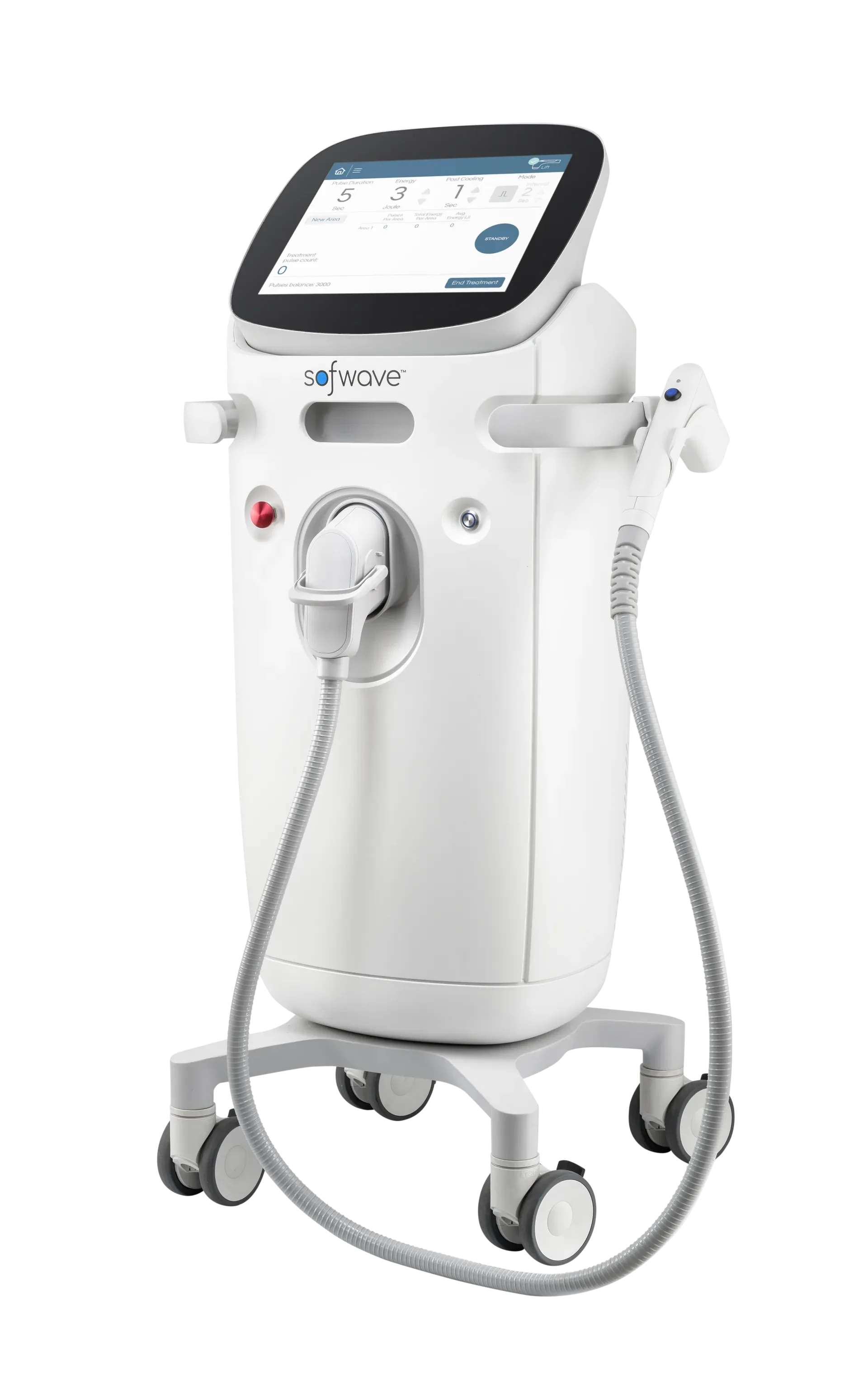
Question 1: Is the Sofwave device on-site a current-generation Sofwave Medical platform with manufacturer-supplied transducer cartridges? The platform is engineered around the transducer's Synchronous Ultrasound Parallel Beam delivery — counterfeit or off-brand transducers do exist in the broader Asia market and they do not deliver the published clinical effect. Ask for the device serial number and cross-reference it against Sofwave Medical's authorised-provider channels via the Sofwave Medical official site. A serious clinic answers this in seconds; a clinic that hesitates or pivots to 'similar technology' is a fail. Question 2: Is the device MFDS-cleared and the clinic itself MFDS-registered as a medical institution that may operate Class-II therapeutic energy devices? The Korean Ministry of Food and Drug Safety publishes the clearance database openly. Question 3: Will the treatment be planned and signed off by a board-credentialled senior physician — not delegated entirely to a nurse-technician operator? Ask for the senior physician's name in advance and verify it against the clinic's published staff page. Question 4: Is the clinic registered with the Korea Health Industry Development Institute as a medical-tourism-eligible facility? KHIDI registration is the relevant cross-check for international patients and the KHIDI medical-tourism resources explain the registration framework that protects regional patients on the Korean side.
Group B — calibration and delivery discipline (Questions 5 to 8)
Question 5: What is the consultation duration before the Sofwave session itself begins? Serious Sofwave providers in Gangnam allocate 20 to 40 minutes for candidacy review, skin-quality assessment, lifting-target mapping, and treatment-zone planning. A clinic that quotes a 5-minute consultation and a same-day immediate treatment is selling a transactional energy session, not a planned Sofwave protocol. Question 6: How many transducer passes and how many treatment lines will be delivered on the planned zones, and how does that compare to Sofwave Medical's published treatment-protocol guidance? Ask the senior physician to walk through the line-count and pass-count plan. A clinic that cannot articulate the plan in numerical terms is a fail. Question 7: Who physically delivers the energy and what is their training credential? In Korea, energy-device delivery is typically performed by a licensed nurse under physician supervision; the clinic should be able to name the operator, describe the training pathway, and identify the senior physician who has reviewed the treatment plan. The honest read on Gangnam: junior staff with limited supervision is the typical delivery problem, and a senior-physician-on-site model is the meaningful upgrade. Question 8: What is the post-treatment evaluation interval and protocol? A clinic that books no post-treatment evaluation and offers no Week-8-to-12 follow-up window is operating a single-transaction model rather than a clinical-relationship model. Singapore, Hong Kong, and Malaysia patients should expect at minimum a remote photograph submission protocol at Week 8 to 12 and a senior-physician review of the response trajectory.
Group C — aftercare, follow-up, and contingency infrastructure (Questions 9 to 12)
Question 9: What is the documented home-country contingency protocol if a complication develops in Singapore, Hong Kong, or Kuala Lumpur after return travel? Sofwave's adverse-event profile is mild and the typical regional follow-up question is post-treatment erythema persistence or unexpected sensory change rather than a structural complication, but a serious Korean clinic has a documented channel for remote consultation with a senior physician via secure messenger and a willingness to liaise directly with a home-country dermatologist if needed. Question 10: Is the quoted price an all-in number or a base-package number with add-ons surfaced at the consultation? The pricing fragmentation pattern is the single most common Singapore-to-Gangnam friction point — the patient lands expecting one number and is presented with transducer wear-out fees, eye-area extras, multi-zone surcharges, and combination upsells. Ask explicitly: 'Is this the total invoice or are there add-ons surfaced at consultation?' A clinic that cannot give a clean answer is a fail. Question 11: What is the published Sofwave maintenance interval and is annual maintenance discounted under a package structure? Sofwave is typically an annual maintenance protocol in Korean clinical-practice patterns and a clinic that does not articulate the maintenance arc is not thinking about the patient longitudinally. Question 12: Will the clinic provide a written treatment record including device serial, transducer batch, line-count delivered, zone-by-zone protocol, and senior-physician sign-off — in English — for the patient's home-country dermatologist? This is the single biggest separator between a serious Sofwave clinic and a generic one. The American Academy of Dermatology international-patient resources emphasise the importance of the written record for cross-border continuity-of-care and a Korean clinic that refuses or hedges is a fail.
Red flags that should end the conversation immediately
Three red flags are categorical end-the-conversation signals and not negotiation points. Red flag one: same-day high-pressure deposit demand on the consultation call, particularly paired with a discount that 'expires today.' This is the unambiguous signature of a transactional operator and the underlying clinical model is rarely sound. Red flag two: vague or pivoting answers on the platform-verification questions — 'similar technology,' 'our own version,' 'imported clinical-grade.' Sofwave Medical's transducer is the platform and substitutions do not deliver the published effect; clinics that hedge on platform identity are usually running a different device under a misleading marketing name. Red flag three: refusal to name the senior physician who will sign off on the treatment plan, or refusal to provide a written treatment record in English afterward. This is the documentation-and-accountability signal and a serious clinic does not hesitate on either. Less categorical but still meaningful: combination pricing that requires an immediate decision on filler, botulinum toxin, or other adjacent modalities at the Sofwave consultation; aggressive cross-selling on packages of three or six sessions when one well-delivered session is the typical standard-of-care starting point; coordinator-only communication channels with no senior-physician contact possible before booking. The Korean Ministry of Health and Welfare patient-protection resources catalogue the regulatory framework on medical advertising and patient communication and provide context on what a serious Korean clinic looks like operationally.
Cross-checks the regional reader can run before any deposit moves
Four cross-checks complete the editorial vetting picture. Cross-check one: verify the clinic's MFDS medical-institution registration and the device's MFDS clearance independently rather than trusting the clinic's marketing copy. Cross-check two: verify KHIDI registration via the openly published medical-tourism facilitator and clinic database, which is the protection the Korean government has built specifically for the Singapore-Hong Kong-Malaysia inbound segment. Cross-check three: ask the clinic to introduce the senior physician on a brief video consultation before the deposit moves. A clinic that hesitates is not running a senior-physician model regardless of what the marketing copy says. Cross-check four: cross-reference the published treatment record with the home-country dermatologist of choice. The Singapore aesthetic community is small and a Singapore-based dermatologist will recognise immediately whether a Korean clinic's treatment-record format is the genuine senior-physician documentation pattern or a coordinator-generated marketing document. The regional reader who runs all four cross-checks before the deposit moves typically lands at a serious Sofwave provider rather than a transactional one, and the difference in clinical outcome — and in invoice transparency — is substantial.
“The platform is brand-name and the technology is well-engineered. What varies in Gangnam is the delivery — senior-physician calibration versus junior-technician throughput — and the vetting checklist exists to surface that distinction before the deposit moves.”
Frequently asked questions
How many of these twelve questions does a serious clinic need to answer cleanly before I book?
Ideally all twelve, and at minimum nine of the twelve with clean answers and no hedging on the platform-verification or senior-physician questions. The single non-negotiable group is Group A (Questions 1 to 4) on credentials and platform — any hedge there is a fail. Groups B and C tolerate one or two soft answers, but the senior-physician sign-off and written-record questions should be hard yeses.
Is it normal for a Gangnam Sofwave clinic to refuse to name the senior physician before booking?
No. A serious senior-physician-led clinic is happy to name the physician, schedule a brief video consultation, and put the physician's name on the written treatment record. Refusal to name the physician is the unambiguous signature of a coordinator-driven operator running junior staff on the treatment side, and the editorial recommendation is to walk away.
What if a clinic says they use 'Sofwave-equivalent technology' instead of Sofwave Medical?
End the conversation. Sofwave is a single manufacturer (Sofwave Medical) with a single proprietary platform; there is no licensed 'equivalent' in the Asia market. Clinics using this language are running a different device — usually a different ultrasound platform — under misleading marketing, and the published clinical effect of Sofwave does not transfer.
How do I verify MFDS clearance and KHIDI registration as a Singapore patient?
MFDS publishes its medical-device clearance database openly at mfds.go.kr/eng and a clinic should be able to provide the clearance number on request. KHIDI publishes its registered medical-tourism facilitator and clinic database at khidi.or.kr/eng — search by clinic name or facility ID. A clinic that cannot produce either reference is operating outside the framework that protects regional inbound patients.
Is the same-day discount push really always a red flag?
In the Sofwave context in Gangnam, yes. Sofwave maintenance is an annual protocol and there is no clinical reason to compress the decision to a same-day deposit. Discount urgency is the signature of a transactional operator running a churn-volume model, and the underlying clinical delivery is rarely calibrated. Sleep on the decision and the discount that 'expired today' will typically reappear next week.
Should I pay the deposit through the clinic or through a third-party medical-tourism facilitator?
Either model can work if the facilitator is KHIDI-registered. A registered facilitator adds a layer of regulatory accountability and can liaise with the clinic on the Korean side; an unregistered facilitator removes regulatory protection and is a red flag in itself. Always verify facilitator registration before the deposit moves regardless of the booking channel.
What documentation should I expect to take home after the Sofwave session?
An English-language written treatment record listing the device serial, transducer batch number, line-count delivered, zone-by-zone protocol, the senior physician's name and sign-off, and the recommended follow-up interval. Singapore, Hong Kong, and Malaysia patients should specifically ask for this in writing because their home-country dermatologist will want it for continuity-of-care.
If the clinic answers all twelve questions cleanly but the price is at the very top of the Gangnam range, is that a problem?
Not necessarily. A senior-physician-led Sofwave clinic with manufacturer-verified platform, MFDS and KHIDI compliance, full English documentation, and a structured follow-up protocol is genuinely more expensive to operate than a transactional clinic, and the price difference often reflects that. The clinical value to a regional patient — under-receiving Sofwave's actual benefit is the more expensive mistake than over-paying for a serious delivery.