Protocol Note
Sofwave platform awards and industry recognition, decoded
Aesthetic Industry Awards, NewBeauty Best of Beauty, FDA 510(k) clearance ledger, and the patient-side translation of what each award actually signals about device pedigree, safety record, and clinical-evidence depth.
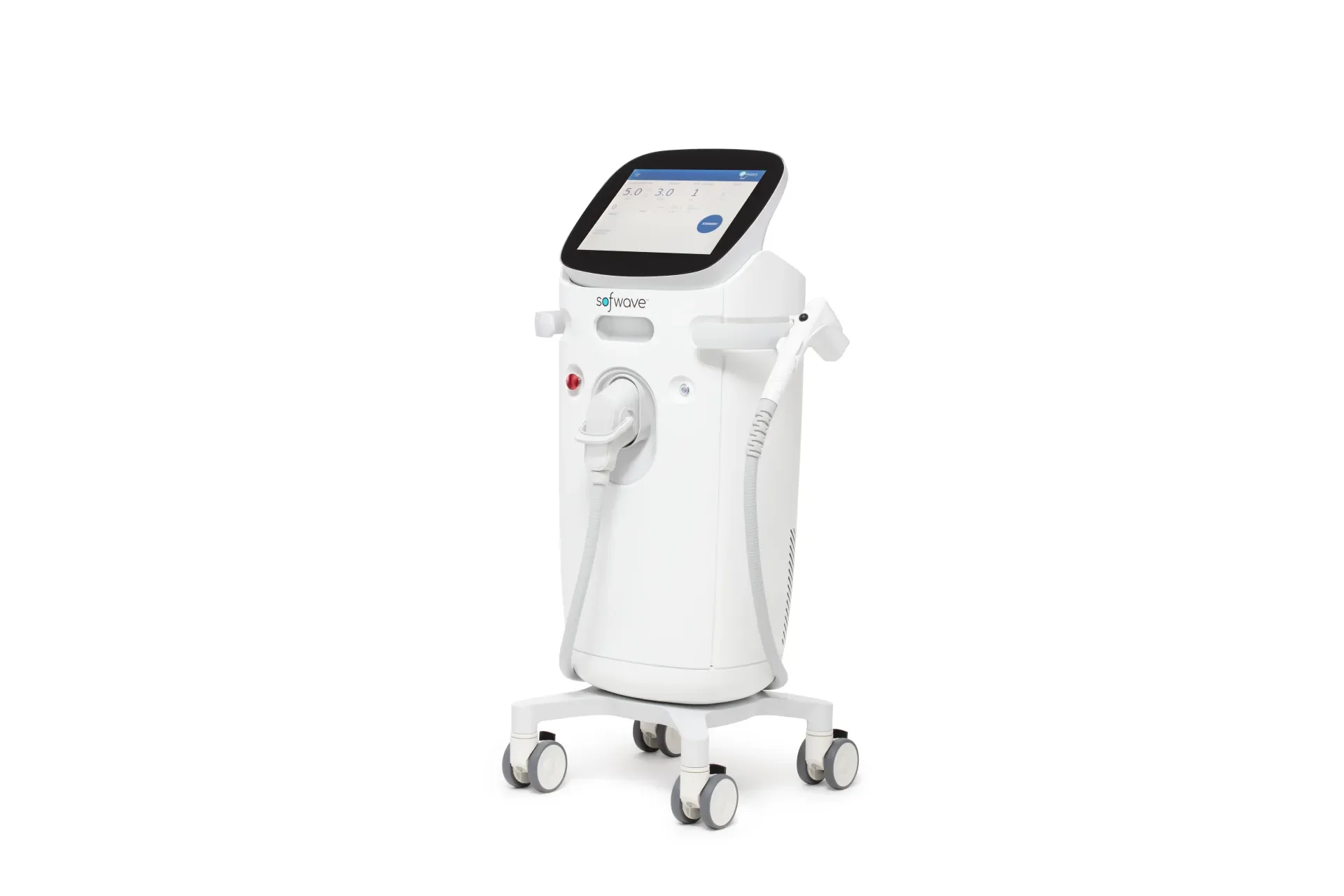
Sofwave Medical, the Israeli company that developed and commercialised the SUPERB Synchronous Ultrasound Parallel Beam platform, has accumulated a notable run of industry awards and regulatory milestones since the device received its first United States FDA 510(k) clearance in 2019. For international patients evaluating Sofwave in Gangnam, Seoul, the question is not whether the awards exist — the manufacturer's marketing surfaces them prominently — but what each award actually signals about the device's clinical pedigree, safety record, and place in the global aesthetic-energy ecosystem. This editorial decodes the recognised awards, the FDA clearance ledger, the publication footprint in peer-reviewed aesthetic-medicine journals, and the patient-side interpretation of what device pedigree actually means in a consultation chair. The honest read is that industry awards correlate loosely with platform quality but are not a substitute for verifying device authenticity at the point of treatment — a verification step the Sofwave Medical authorised-provider directory makes straightforward. Korea's Ministry of Food and Drug Safety maintains its own platform-registration ledger that operates in parallel to the US and European authorisation frameworks. Awards inform context; clearances and provider-directory verification anchor the actual safety decision.
The Aesthetic Industry Awards — what the recognition actually measures
The Aesthetic Industry Awards, presented annually in conjunction with the Aesthetic Multispecialty Society and circulated through trade publications including Aesthetic Authority and The Aesthetic Guide, recognise device platforms across a range of categories spanning energy-based devices, injectables, regenerative therapies, and ancillary aesthetic technologies. Sofwave has been recognised in the non-invasive lifting and tightening category in multiple award cycles since its 2019 commercial launch, with citations referencing the SUPERB seven-transducer architecture, the FDA-cleared indications for submentum, neck, eyebrow lifting and the improvement of facial lines and wrinkles, and the clinical-evidence footprint published in journals including Lasers in Surgery and Medicine and the Journal of Cosmetic Dermatology. The honest editorial read on these awards is that they reflect a triangulation of three signals: practitioner-physician voting, clinical-evidence publication volume, and category-level innovation — the awards are not a controlled head-to-head clinical comparison and should be read as a market-recognition signal rather than a clinical-superiority verdict. For a patient evaluating Sofwave in Korea, the practical implication is that the platform sits in the upper tier of the non-invasive lifting category by industry consensus, which is informative context but does not substitute for the candidate-matching, physician-experience, and device-authenticity verification that determine individual treatment outcomes. The Sofwave Medical clinical-evidence library catalogues the peer-reviewed studies that underpin the awards-jury recognition.
NewBeauty Best of Beauty and the consumer-publication tier of recognition
Beyond the practitioner-facing Aesthetic Industry Awards, Sofwave has received recognition in consumer aesthetic publications including the NewBeauty Best of Beauty Awards, which evaluate aesthetic technologies through a panel comprising both practitioner-physicians and consumer journalists. The recognition cycle for Sofwave in NewBeauty publications has cited the platform's combination of FDA-cleared indications, the comparatively shorter session duration relative to legacy focused-ultrasound platforms, the integrated skin-cooling at the handpiece contact surface, and the comfort profile reported by patients in clinical trials. The consumer-publication tier of recognition differs meaningfully from the practitioner-tier Aesthetic Industry Awards in that the evaluation rubric incorporates consumer-experience factors — comfort, downtime, perceived value — in addition to clinical-evidence depth and innovation. For ASEAN-region readers evaluating Sofwave, the NewBeauty tier of recognition is useful directional context but should be read with awareness that consumer-publication award decisions also incorporate marketing-relationship factors. The substantive signal is that Sofwave has been independently surfaced in editorial coverage by aesthetic publications that reach significant readership in the United States, United Kingdom, Australia, and increasingly the ASEAN region. The American Society for Dermatologic Surgery maintains a generalist clinical-pearls library that provides parallel orientation on how aesthetic-energy devices earn category-level recognition through clinical-evidence accumulation.
FDA 510(k) clearance ledger — the regulatory pedigree, decoded
The most consequential pedigree signal for any aesthetic-energy device is the regulatory-clearance ledger, and Sofwave has accumulated three primary United States FDA 510(k) clearances since the platform's initial market authorisation. The first clearance, granted in 2019 under K183303, authorised the device for lifting the lax submentum, neck, and eyebrow — the foundational indication-set that anchored the platform's commercial launch. The second clearance, granted in 2020 under K203567, expanded the indications to include the improvement of facial lines and wrinkles, broadening the platform's clinical lane to encompass dermal-quality outcomes in addition to laxity-and-lifting. The third clearance, granted in 2021 under K212867, added the short-term improvement of the appearance of cellulite as an authorised indication, extending the platform's application beyond the face-and-neck region. For an international patient evaluating Sofwave in Korea, the FDA 510(k) clearance ledger is meaningful because it reflects a multi-cycle regulatory engagement with the platform's safety and efficacy substantiation across distinct anatomical regions and indication categories — a depth of regulatory pedigree that distinguishes Sofwave from platforms with single-indication clearances or with non-United States authorisation only. Korea's own platform-registration process operates through the Ministry of Food and Drug Safety, which conducts its own technical-dossier review and authorises the platform for Korean clinical use within the scope of its registration. Cross-checking the specific clinic's device against the manufacturer's authorised-provider directory remains the practical patient-side verification step.
European CE mark, Australian TGA, and the global authorisation footprint
Beyond United States FDA clearance and Korean MFDS registration, Sofwave Medical has accumulated regulatory authorisations across the major global aesthetic-medicine markets including European Union CE mark certification, Australian Therapeutic Goods Administration registration, Brazilian ANVISA authorisation, and equivalent clearances in Canada, Japan, Singapore, and most ASEAN-region jurisdictions. The breadth of the global authorisation footprint is a substantive pedigree signal because it reflects the platform's ability to satisfy distinct regulatory-review frameworks operated by independent national authorities — each with its own technical-dossier requirements, clinical-evidence standards, and post-market surveillance obligations. For an ASEAN-region patient travelling to Korea for Sofwave, the practical implication is that the platform's regulatory pedigree is comparable to or stronger than the device authorisation in the patient's home country, which informs the patient's confidence in the platform's safety substantiation. The European Union CE mark, in particular, operates under the EU Medical Device Regulation framework which since 2021 has imposed a more rigorous clinical-evidence standard than its predecessor Medical Device Directive — a regulatory tightening that has filtered out a number of legacy aesthetic-energy platforms with insufficient clinical-evidence substantiation. Sofwave's successful renewal of its CE mark under the MDR framework is a meaningful pedigree signal that complements the FDA 510(k) ledger and the Korean MFDS registration in supporting the platform's place in the global aesthetic-energy ecosystem.
Peer-reviewed publication footprint — the clinical-evidence pedigree
The most substantive pedigree signal for an aesthetic-energy platform is the peer-reviewed publication footprint that supports its clinical claims, and Sofwave has accumulated a meaningful body of published clinical evidence since 2019. The publication footprint includes multi-centre clinical-trial reports establishing the dose-response, safety, and efficacy profile of the SUPERB architecture across Fitzpatrick I through VI skin types; investigator-initiated studies examining the platform's combination logic with regenerative bio-actives and complementary energy-based modalities; and physician-author case series published in journals including Lasers in Surgery and Medicine, the Journal of Cosmetic Dermatology, Dermatologic Surgery, and the Aesthetic Surgery Journal. For a patient evaluating Sofwave, the publication footprint represents independent clinical-investigator engagement beyond the manufacturer's internal validation studies — a depth of independent evidence that distinguishes platforms with substantive clinical pedigrees from those whose claims rest primarily on manufacturer marketing assertions. The Korean clinical-investigator community has contributed through case series and protocol-development reports authored at major university dermatology departments in Seoul and Busan, which adds regional context for ASEAN-region patient expectations. The Sofwave Medical clinical-evidence page catalogues the published-evidence landscape.
What the awards do not measure — and the patient-side limits of pedigree signals
The honest editorial read is that pedigree signals correlate with platform quality but do not substitute for individual-treatment outcome determinants. Industry awards do not measure individual physician technique, beam-pattern protocol experience, or the senior-versus-junior practitioner allocation logic that determines the actual quality of the treatment a patient receives at a specific clinic. Regulatory clearances do not measure whether the specific device installed is an authentic manufacturer-registered unit operated within its authorised indication-set — a verification step that remains the patient's responsibility. Peer-reviewed publication footprint does not measure whether the patient's individual candidate-profile matches the indication-set the published evidence substantiates. Awards inform context; clearances anchor regulatory pedigree; publications substantiate clinical claims. None of them substitute for the candidate-matching, physician-experience, and device-authenticity verification that determine individual treatment outcomes. Pedigree signals reduce platform-level uncertainty without eliminating treatment-level execution risk.
How to use awards and pedigree information during clinic selection
Awards and pedigree information have practical use during clinic selection in Korea, but the use depends on reading them as a complement to — not a substitute for — direct clinic-side verification. The recommended sequence is to first confirm that the clinic operates an authentic Sofwave device by cross-checking against the manufacturer's authorised-provider directory, then verify the platform's regulatory pedigree through the FDA 510(k) ledger and Korean MFDS registration, then read the peer-reviewed publication footprint to develop realistic expectations about the indication-set the platform substantiates, and finally use awards information as a directional signal about the platform's place in the global aesthetic-energy ecosystem. The pedigree-and-awards sequence informs platform-selection; the clinic-selection decision requires separate consideration of physician seniority, beam-pattern protocol experience, multi-language patient-coordination quality, and the clinic's safety-and-follow-up infrastructure. For deeper guidance, see the clinic vetting checklist. For pricing context, see the Korean pricing guide. For the platform-level overview, see the Sofwave overview.
Frequently asked questions
What are the major awards Sofwave has received?
Sofwave has been recognised in the Aesthetic Industry Awards in the non-invasive lifting and tightening category in multiple award cycles since 2019, has been surfaced in the NewBeauty Best of Beauty Awards, and has been cited in editorial coverage by aesthetic-medicine trade publications including Aesthetic Authority and The Aesthetic Guide. The awards reflect practitioner-physician voting, clinical-evidence publication volume, and category-level innovation.
How many FDA 510(k) clearances does Sofwave hold?
Three primary United States FDA 510(k) clearances. K183303 (2019) authorised lifting of the lax submentum, neck, and eyebrow; K203567 (2020) expanded indications to include the improvement of facial lines and wrinkles; K212867 (2021) added the short-term improvement of the appearance of cellulite. The multi-cycle clearance ledger reflects a depth of regulatory engagement that distinguishes Sofwave from platforms with single-indication clearances.
Is Sofwave authorised for use in Korea?
Yes. Sofwave operates under Korean Ministry of Food and Drug Safety platform registration, which authorises clinical use within the scope of the MFDS-approved indications. Patients can verify the specific clinic's device authenticity through the Sofwave Medical authorised-provider directory and confirm the clinic's regulatory standing through the MFDS framework.
Do industry awards mean a device is clinically superior to competitors?
No. Industry awards reflect practitioner-voting consensus, clinical-evidence publication volume, and category-level innovation, but they are not controlled head-to-head clinical comparisons. Awards inform the platform's place in the aesthetic-energy ecosystem and reduce platform-level uncertainty, but they do not substitute for candidate-matching, physician-experience, and device-authenticity verification at the individual treatment level.
How can a patient verify that a Korean clinic operates an authentic Sofwave device?
The Sofwave Medical authorised-provider directory at sofwave.com publishes a verifiable global list of clinics operating registered Sofwave devices. Cross-checking the clinic's claim against the manufacturer's directory is a small verification step that prevents the documented market issue of clinics advertising Sofwave-equivalent or parallel-beam-ultrasound platforms that are not in fact Sofwave hardware.
What is the European CE mark and why does it matter for Sofwave's pedigree?
The European CE mark is the certification framework administered under the EU Medical Device Regulation that authorises medical devices for sale across the European Economic Area. Since 2021 the MDR framework has imposed a more rigorous clinical-evidence standard than its predecessor, and Sofwave's successful renewal under MDR is a substantive pedigree signal that complements the FDA 510(k) ledger and Korean MFDS registration.
Does Sofwave have peer-reviewed clinical evidence supporting its claims?
Yes. Sofwave has accumulated multi-centre clinical-trial reports, investigator-initiated studies, and physician-author case series published in aesthetic-medicine journals including Lasers in Surgery and Medicine, the Journal of Cosmetic Dermatology, Dermatologic Surgery, and the Aesthetic Surgery Journal. The published-evidence footprint includes Korean clinical-investigator contributions that add regional context for ASEAN-region patients.