Protocol Note
Sofwave pricing across five markets — the honest cost-benefit read
Singapore SGD, Hong Kong HKD, Malaysia MYR, Gangnam KRW, and United States USD pricing for the same Sofwave face protocol — with the inclusions, exclusions, and travel-cost overlays that decide where the math actually lands.
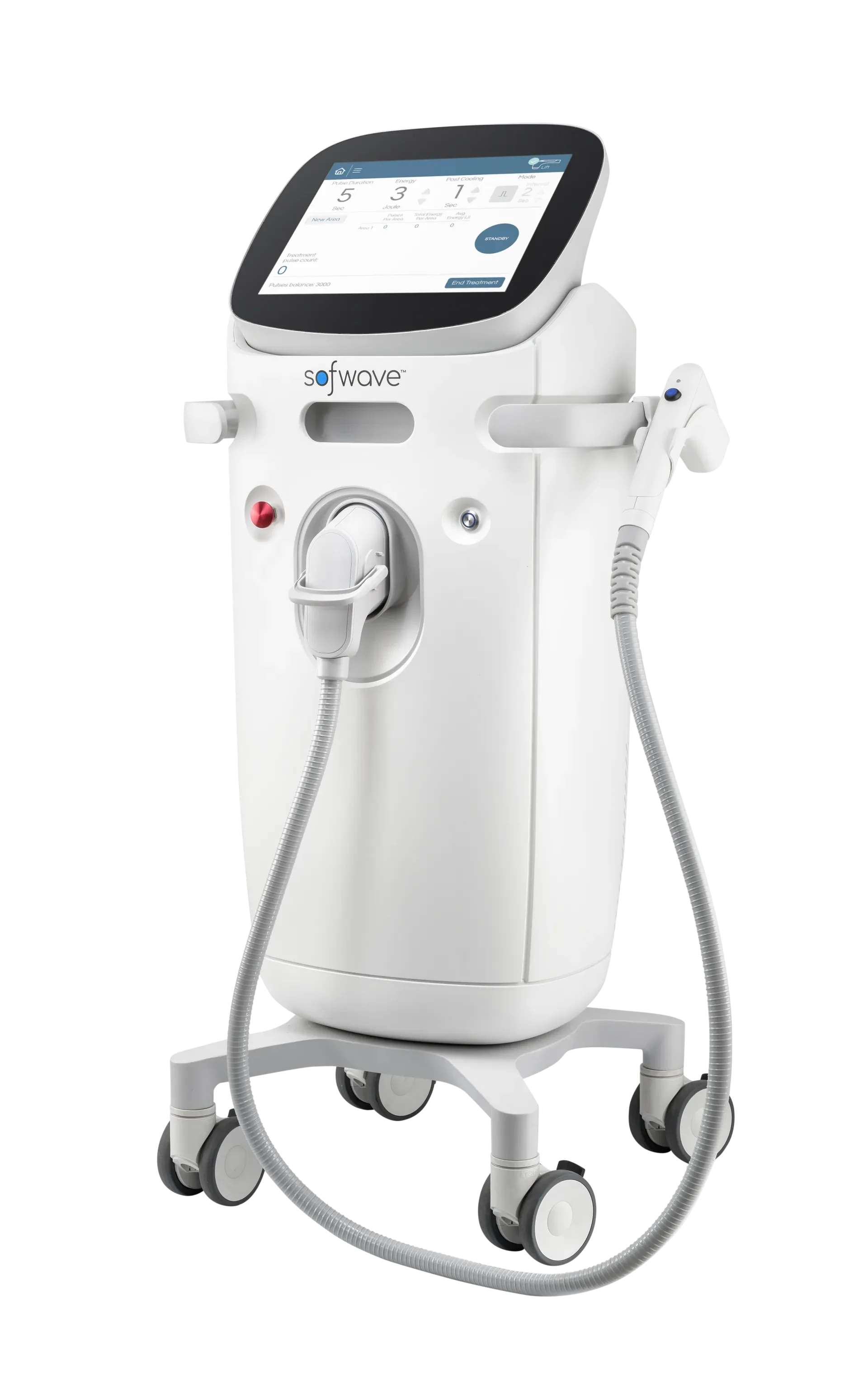
Sofwave pricing varies more across international markets than the device hardware itself ever could, and a regional patient comparing a Singapore quote against a Hong Kong quote against a Gangnam Seoul quote against a Kuala Lumpur quote against a United States quote is looking at a price spread of roughly five-to-one for the same authorised Sofwave Medical platform delivering the same Synchronous Ultrasound Parallel Beam energy through the same transducer cartridge. The hardware is identical because Sofwave Medical operates a single global manufacturing-and-distribution pipeline and the authorised-provider channels in each market receive the same device, the same firmware, and the same transducer supply chain. What varies is the cost structure around the device — physician compensation, clinic overhead, regulatory burden, marketing cost, currency dynamics, and local demand elasticity. This guide lays out per-protocol pricing in each of the five major regional markets a Sofwave patient compares against, expresses each range in local currency with cross-market conversions, then walks through what each market typically includes in the quoted price and the honest cost-benefit read for the regional patient deciding whether to treat at home or to plan a Korea trip. A Korea trip is not cheaper than a Singapore session by the headline KRW figure alone — the cost-benefit calculus depends materially on flight cost, hotel cost, time-away-from-work, and clinical-quality match. The comparison is editorial; conversions are illustrative at 2026 exchange rates; contractual pricing is set by individual clinics and should be confirmed in writing before any deposit moves.
Singapore — SGD 2,500 to SGD 4,800 for a face protocol
Singapore Sofwave pricing for a face-only protocol typically lands in the SGD 2,500 to SGD 4,800 range across the established aesthetic-medicine landscape in Orchard, Tanglin, and the central business district — floor reflecting mid-tier clinics with experienced operators, ceiling reflecting flagship physician-led practices with senior-dermatologist delivery. At 2026 exchange rates SGD 2,500 converts to approximately USD 1,840, HKD 14,400, MYR 8,400, and KRW 2,540,000; SGD 4,800 converts to approximately USD 3,530, HKD 27,600, MYR 16,100, and KRW 4,890,000. The Singapore market is regulated by the Singapore Medical Council and the Ministry of Health, and the published price is typically the contractual price with limited add-on surfacing — Singapore patients expect itemised quotation up front and established clinics deliver that pattern. Inclusions typically cover consultation, photography, topical anaesthetic, the session, and a follow-up at Week 8 to 12; exclusions cover oral sedation, eye-area extras, and neck or décolletage layering. The Singapore cost-benefit calculus is honest at the floor and stretches at the ceiling: SGD 2,500 is meaningful value when home is Singapore and a Korea trip overhead is not a comfortable fit; SGD 4,800 is the upper boundary where Singapore pricing makes sense versus a planned Korea trip with a serious Gangnam provider.
Hong Kong — HKD 14,000 to HKD 32,000 for a face protocol
Hong Kong Sofwave pricing for the same face protocol runs HKD 14,000 to HKD 32,000 across Central, Causeway Bay, Tsim Sha Tsui, and Mong Kok — floor reflecting volume-positioned operators, ceiling reflecting senior-physician-led flagship practices in Central. At 2026 exchange rates HKD 14,000 converts to approximately USD 1,790, SGD 2,440, MYR 8,170, and KRW 2,480,000; HKD 32,000 converts to approximately USD 4,100, SGD 5,570, MYR 18,700, and KRW 5,660,000. Hong Kong regulation runs through the Medical Council of Hong Kong and the licensing framework is comparable in stringency to Singapore's. The inclusion pattern is similar to Singapore — consultation, photography, anaesthetic, session, single follow-up — though Hong Kong clinics tend more toward bundled multi-session packages, and a patient should explicitly ask whether the quoted figure is a single session or a package of two or three. The cost-benefit positioning relative to Gangnam mirrors Singapore: Hong Kong floor competitive against Gangnam mid-tier, Hong Kong ceiling reaching territory where a planned Korea trip starts to make economic sense. Hong Kong has the additional advantage of geographic proximity to Korea — flight time roughly four hours with multiple daily direct connections — which lowers trip-overhead substantially versus Singapore or Kuala Lumpur readers.
Malaysia — MYR 7,500 to MYR 18,000 for a face protocol
Malaysia Sofwave pricing in Kuala Lumpur and Petaling Jaya runs MYR 7,500 to MYR 18,000 for a face-only protocol — floor reflecting mid-tier operators, ceiling reflecting senior-physician-led practices clustered around Mont Kiara, Bangsar, and KLCC. At 2026 exchange rates MYR 7,500 converts to approximately USD 1,640, SGD 2,230, HKD 12,800, and KRW 2,270,000; MYR 18,000 converts to approximately USD 3,940, SGD 5,360, HKD 30,750, and KRW 5,450,000. The Malaysian Medical Council and the Ministry of Health Malaysia regulate the aesthetic-medicine landscape, with clinical-quality spread arguably wider than Singapore or Hong Kong due to the larger physical footprint and more varied operator profile across Klang Valley. Malaysia has a meaningful price advantage at the floor — MYR 7,500 is one of the most accessible Sofwave entry points regionally — but the cost-benefit calculus depends heavily on operator selection. Inclusions follow the regional pattern with consultation, photography, anaesthetic, and session covered; multi-session bundling common in Singapore and Hong Kong is less prevalent in Malaysia. For a Kuala Lumpur reader considering a Gangnam trip, trip-overhead is meaningful — flight time roughly seven hours via direct or one-stop connections, hotel cost in Seoul comparable to KL, typical four-to-five-day pattern — and the cost-benefit favours Korea only when the home selection is in the upper half of the MYR range or when candidacy match is materially better with a senior Gangnam provider.
Gangnam Seoul — KRW 1,200,000 to KRW 3,500,000 for a face protocol
Gangnam Seoul Sofwave pricing for the same face protocol typically lands in the KRW 1,200,000 to KRW 3,500,000 range, with the floor representing mid-tier Gangnam clinics with experienced but non-senior operating physicians and the ceiling representing premium positioning in flagship Gangnam clinics with senior physicians who handle the protocol personally. At 2026 exchange rates KRW 1,200,000 converts to approximately USD 870, SGD 1,180, HKD 6,800, and MYR 3,970; KRW 3,500,000 converts to approximately USD 2,540, SGD 3,440, HKD 19,800, and MYR 11,580. The Korean market is regulated by the Ministry of Food and Drug Safety and the Ministry of Health and Welfare, and medical-tourism-eligible clinics are additionally registered with the Korea Health Industry Development Institute under the framework documented in the KHIDI medical-tourism resources. Inclusions in a serious Gangnam clinic quote typically cover consultation, photography, topical anaesthetic, the session, and a documented follow-up protocol; the pricing-transparency framework that the Korean Ministry of Health and Welfare publishes for medical-tourism facilitation requires disclosed pricing to match the contractual quote, and reputable Gangnam clinics deliver that pattern. The headline cost arbitrage versus Singapore, Hong Kong, and Malaysia is real at the floor of the range — KRW 1,200,000 is materially below the floor of any of the three regional comparison markets — but the regional reader should overlay the trip cost (flights, hotel, ground transportation, time-away-from-work) before drawing the cost-benefit conclusion, and the trip-overlay typically lands in the USD 1,000 to USD 3,500 range depending on origin city and travel pattern.
United States — USD 2,500 to USD 6,500 for a face protocol
United States Sofwave pricing for a face-only protocol typically runs USD 2,500 to USD 6,500 across the major metropolitan markets, with regional variation pushing the ceiling higher in Manhattan, Beverly Hills, and the San Francisco Bay Area. The US floor is comparable to the Singapore and Hong Kong ceilings; the US ceiling is meaningfully higher than any regional Asian comparator. At 2026 exchange rates USD 2,500 converts to approximately SGD 3,400, HKD 19,500, MYR 11,400, and KRW 3,450,000; USD 6,500 converts to approximately SGD 8,840, HKD 50,700, MYR 29,650, and KRW 8,970,000. The US market is regulated by the Food and Drug Administration and the relevant state medical boards, with Sofwave Medical's published authorised-provider channels listing the providers cleared to operate the platform under FDA-cleared indications for lifting of lax submentum, neck tissue, and eyebrow lifting plus the more recent fine-line and wrinkle indications. Inclusions in US quotes are highly variable — some practices bundle consultation, treatment, and follow-up; others itemise the consultation as a separate fee and bundle treatment-and-follow-up only — and the cost-benefit calculus for a US patient considering a Korea trip is the most favourable of any source market: the headline arbitrage is two-to-three times for the same protocol, the flight cost from major US hubs to Seoul is meaningful but absorbable against the protocol savings, and the time-away-from-work overlay is the main constraint. For US patients comparing a USD 5,500 New York protocol against a KRW 2,200,000 Gangnam protocol (USD 1,600) the arithmetic strongly favours the planned Korea trip even with a USD 2,500 travel overlay; for US patients comparing a USD 2,800 Phoenix protocol against the same Gangnam alternative the arithmetic is more balanced and the trip-overhead becomes the decisive factor.
What each market includes, what gets surfaced as an add-on, and the honest cost-benefit read
The five-market pricing comparison only reads honestly when the inclusion pattern is held constant. Across all five markets, the typical baseline inclusion is consultation, photography, topical anaesthetic, the treatment session at the manufacturer-specified beam-pulse count for the planned zones, and at least one follow-up evaluation at Week 8 to 12. The typical add-on pattern covers oral sedation if requested, eye-area extras outside the standard grid, multi-zone surcharges for neck or décolletage, and combination-modality upsells such as adding Ultherapy or Thermage in the same session. Singapore and Hong Kong tend toward transparent up-front quotation with limited add-on surfacing; Malaysia and Korea show somewhat more bundling and combination pricing; the United States shows the widest variance with some practices delivering all-in transparency and others operating itemised add-on models. The honest cost-benefit read for the regional reader: the Korea-trip arbitrage is real for Singapore, Hong Kong, Malaysia, and US patients in the upper half of their home-market ranges, most pronounced for US patients in major-metro markets; the arbitrage is marginal for patients already accessing their home-market floor where travel overhead approaches or exceeds the price differential. The cost-benefit calculus also depends materially on clinical-quality match — a Singapore patient who finds a serious senior-dermatologist-led practice at SGD 3,500 is in a different decision space than a Singapore patient whose only home options are mid-tier operators at the same price point. Travel-cost overlay from regional Asian source markets typically runs USD 800 to USD 2,000 for a four-to-five-day Seoul trip; from US source markets the overlay runs USD 1,500 to USD 3,500 depending on origin city and seasonality. The American Society for Dermatologic Surgery international-patient resources provide generalist orientation on the cross-border continuity-of-care framework that the regional reader should expect from a serious provider in any market.
Frequently asked questions
Why is the Sofwave price spread across markets so wide for the same hardware?
The hardware is identical because Sofwave Medical operates a single global manufacturing pipeline, but the cost structure around the device varies materially by market — physician compensation, clinic real-estate overhead, regulatory-compliance burden, marketing-and-acquisition cost, and local price elasticity of demand all combine to produce roughly five-to-one variance across Singapore, Hong Kong, Malaysia, Korea, and the United States. The platform itself contributes essentially nothing to the variance.
Is the Gangnam Seoul price genuinely the cheapest option even after travel cost?
Often yes, but not always. The headline KRW arbitrage is meaningful — the Gangnam floor of KRW 1,200,000 is materially below the floor of Singapore, Hong Kong, or the United States — but the trip overhead of USD 1,000 to USD 3,500 closes part of the gap. The cost-benefit favours Korea most strongly for US patients in major metros and for regional Asian patients accessing the upper half of their home-market ranges; the cost-benefit is roughly neutral for patients already accessing their home-market floor.
Does the Korea-trip arbitrage hold if I am Singapore-based at the SGD 2,500 floor of the local range?
Marginally. The SGD 2,500 Singapore floor converts to roughly KRW 2,540,000, which sits in the middle of the Gangnam range rather than below it. After travel overhead the Korea trip is rarely cheaper in pure dollar terms for a Singapore patient already accessing the local floor; the case for Korea in that scenario rests on clinical-quality differential rather than price. For a Singapore patient comparing against the SGD 4,000-plus end of the local market the Korea arbitrage is meaningful.
How do I confirm the price quoted in any market is the contractual all-in number?
Ask explicitly: 'Is this the total invoice for the planned protocol or are there add-ons surfaced at consultation?' Itemise the inclusions yourself — consultation, photography, anaesthetic, session, follow-up — and ask which are covered and which are extras. Reputable providers in any of the five markets answer cleanly; providers that hedge or pivot are typically operating itemised add-on models that surface at consultation. In Korea specifically the Ministry of Health and Welfare pricing-transparency framework for medical-tourism facilitation requires disclosed pricing to match the contractual quote.
How do US prices compare against Korea after factoring in the travel overlay?
The US-to-Korea arbitrage is the most favourable of any source market because US ceiling pricing (USD 6,500 in Manhattan or Beverly Hills) is two-to-three times the equivalent Gangnam protocol. A USD 2,500 travel overlay still leaves a meaningful net saving versus the upper end of the US market. For US patients in lower-cost metros at the USD 2,800-3,500 range the arithmetic is more balanced and the case rests on clinical-quality match rather than pure price.
What is included in the typical Sofwave protocol price across these five markets?
The baseline inclusion across all five markets is consultation, photography, topical anaesthetic application, the treatment session at the manufacturer-specified beam-pulse count for the planned zones, and at least one follow-up evaluation at Week 8 to 12. Typical add-ons across all five markets are oral sedation if requested, eye-area extras outside the standard grid, multi-zone surcharges for neck or décolletage, and combination-modality upsells with Ultherapy or Thermage.
Does the platform itself vary in quality between markets?
No. Sofwave Medical operates a single global manufacturing pipeline and authorised providers in all five markets receive identical hardware, firmware, and transducer cartridge supply. What varies is operator skill, treatment-plan calibration, and senior-physician involvement — not the device.